
Newsletter #5 Don Quixote is way funnier than it has any right to be
Heyyyy
I don’t really have anything to say? I just had a week vacation, that was really lovely. I did absolutely nothing except sleep in the garden and sketch and go for walks. I felt like a Victorian woman by the sea. Except the sea was a park and I got woken up by the cat everyday at six o’clock because he wanted breakfast.
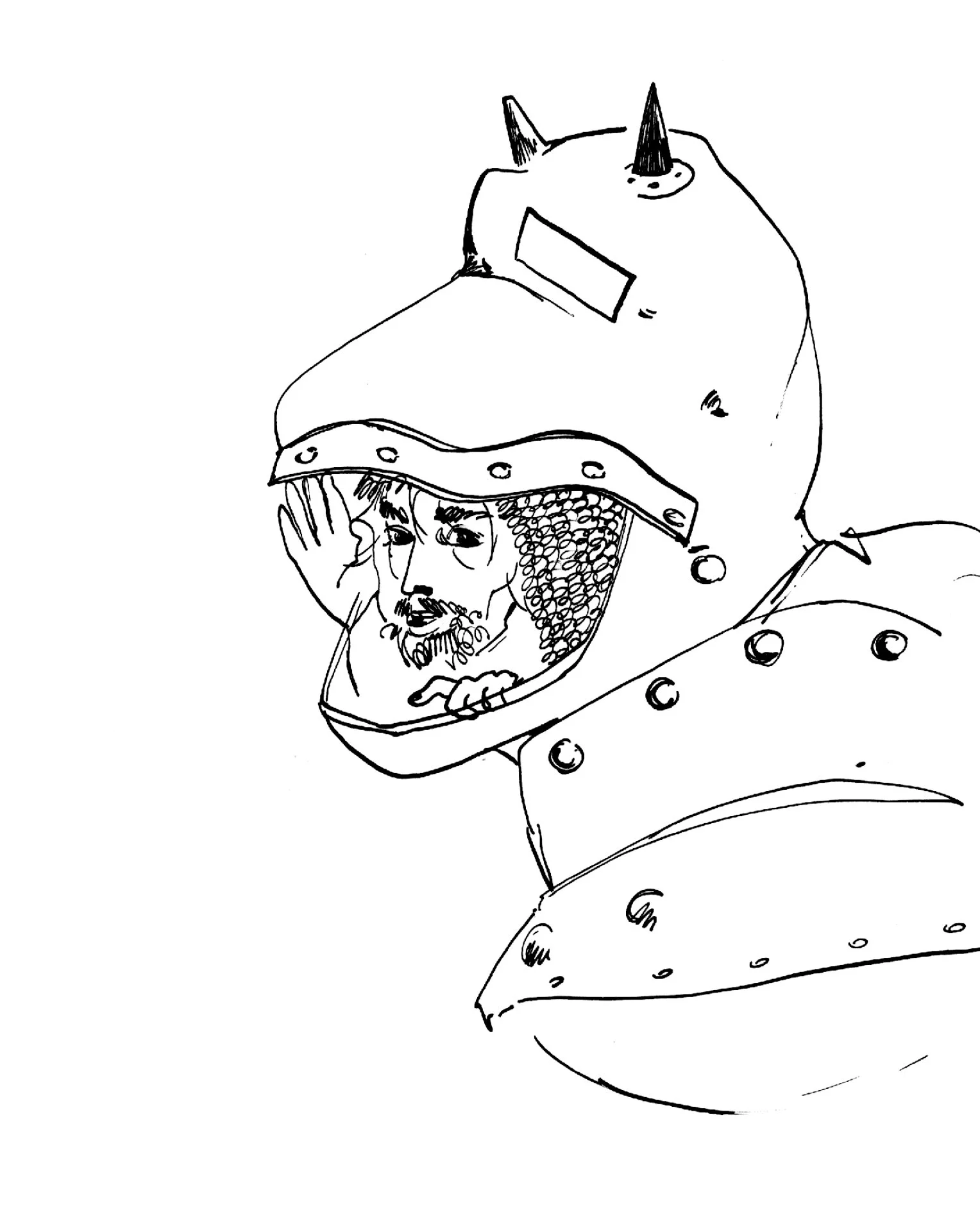
Don Quixote is a book that has genuinely made me laugh out loud. It follows a man so consumed by tales of chivalry that he comes to believe he himself is a knight destined to help the world. Sword in hand, with his horse, sidekick and his donkey, he travels through the land, ready to come to the aid of anyone who asks.
I have to admit: I'm only a third of the way through, but I never expected to enjoy it this much. I thought it would be a dusty old book I'd have to force myself through. at first I was drawn to the idea of a knight who no longer fits his time, stumbling through absurd adventures, but beyond that I didn't really know what to expect. I'd picked it up for a few euros some time ago, I was going through a phase of drawing a lot about knights and thought: why not read a book about one. I of course already knew the famous image of him shouting at windmills, but I haven't even reached that part yet.
One of the things I enjoy most is how much you can read between the lines. From the dialogues, from the way people are described, their social position, their relationships, the reasons they interact at all. That's something I also love about older literature in general.
Jane Austen, for example. The two actually have quite a bit in common. In both cases, you step into a world so socially different from the one we live in now that you have to pay very close attention to the dynamics between people. Don Quixote, through his particular form of madness, occupies a socially undefinable position: nobody quite knows how to relate to him. He claims to be a knight, but the people around him don't seem especially impressed and it even feels as though the chivalric ideal he embodies was already considered outdated in his own time.
In 2026, we have our own layered social dynamics too: class, money, expectations all quietly at play in every conversation. Those are simply different from the dynamics of the era in which this book was written, and that's exactly what makes it a kind of investigation into time and place for me. I'm reading a story with social critique embedded in it, while simultaneously researching the setting itself: what did people find interesting back then, what was being criticized, and what do we still recognize in it today?
But the most important thing, which I almost forgot to mention, is that I have genuinely laughed out loud. The dialogues between Don Quixote and his sidekick Sancho are truly funny. Someone who moves through the world with a sincere desire to do good, but whose grip on reality is completely skewed. That's a beautifully dissonant and also quietly moving premise. That combination of humor and a faintly melancholic undertone is something I find really compelling. It reminds me a little of The Office, except I genuinely can't watch that show, it makes me deeply sad.
What I find so fascinating is the question the book poses to everyone around Don Quixote: do I play along, or not? What am I actually supposed to do with this? It's a question I find myself asking as a reader too. I'm on page 150 now, and it's so different from what I expected. I'm very curious to see where it goes from here. I'll keep you posted.
