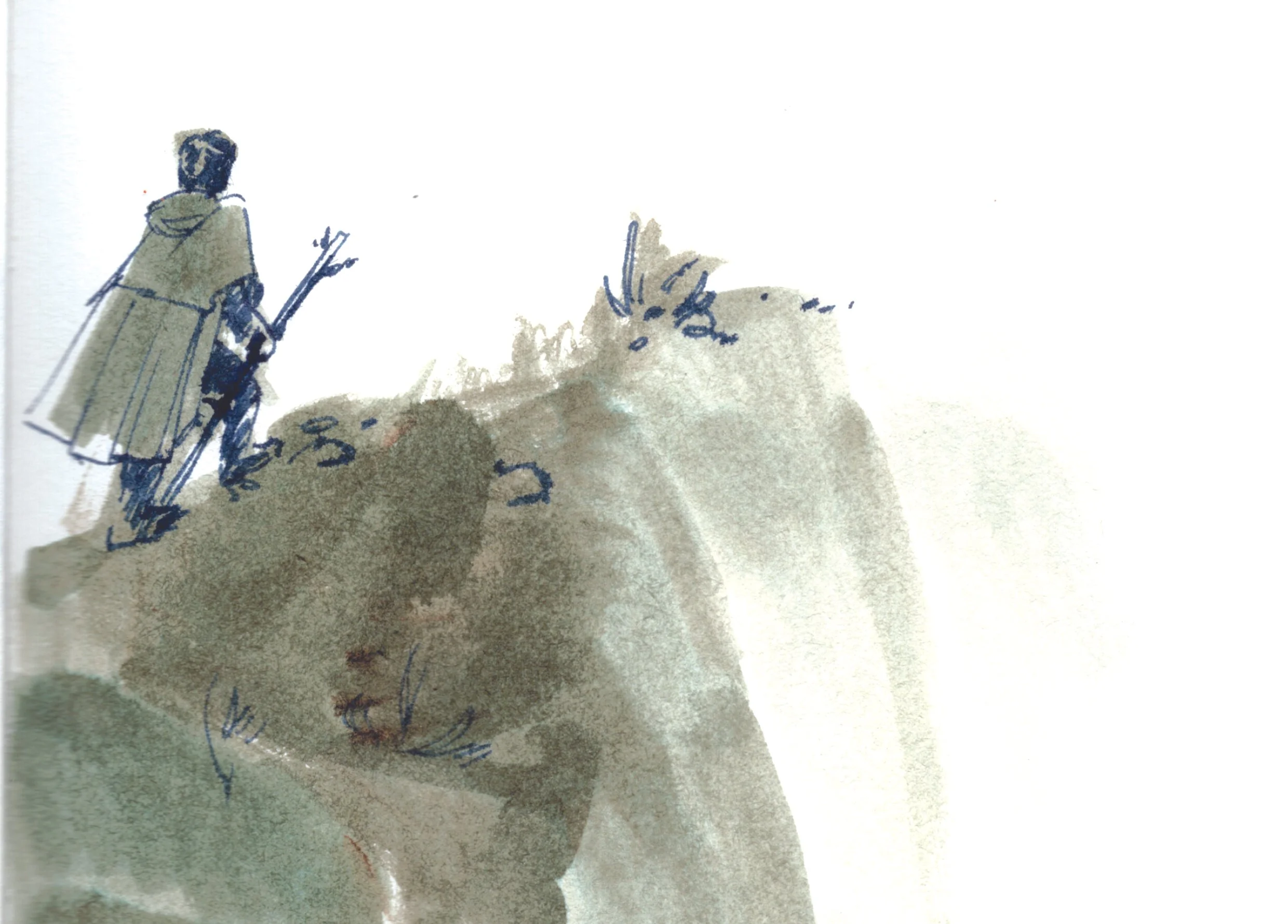
Newsletter #3 Robin Hobb made me be kinder to myself
Heyyyy,
Welcome back friends!
This book series has become one of my absolute favorites the past year and a half. I’ve not stopped thinking about it since i’ve finished it and I would love to share a bit of my reasoning about why it keeps living in my head.
To Sarah; thank you for being my reading buddy in this <3 and please go finish the last two books.
I’ve finished the Robin Hobb audiobooks this last november. What moved me most is that I’ve started thinking differently about how I look at myself. I notice I’ve become gentler.
Normally I don’t really feel at home in fantasy. Castles, dragons, and elves can quickly strike me as a bit too lofty. But what Hobb does, and what I don’t often see this powerfully in the genre, is make her characters feel unbelievably real. As if you’re not listening to a “hero,” but to a person: with their own history, their own pitfalls, their own mistakes.
The realm of the Elderlings constist of 16 thick, brick-like books which comprise the Farseer, Liveship Traders and Tawny Man trilogies, the Rain Wild Chronicles, and the Fitz and the Fool trilogy. I’ve focused on the Farseer, Tawny man and the Fitz and the Fool trilogy. And chose to leave the other two series for a different occasion.
In the series, you follow one main character, FitzChivalry Farseer, for almost their entire life. You’re usually in their head, traveling with them from childhood to the end. So you see not only what happens, but also how each event shifts something in their body, their relationships, and their thoughts. I find it astonishingly skillful how Hobb weaves all those separate moments into their ability to choose, to love, to run, to cling on. It never feels like plot, but like a life.
One of the first decisive experiences in the story has to do with a dog and with magic. After that, Fitz and the pup Nosy can no longer see themself as separate from that animal. His gaurdian Burrich, the castle stable master, notices the change in the boy and recognizes is for what it is, the Wit.
The books feature two kinds of magic: the socially acceptable Skill, practiced by the ruling class, and the despised Wit, relegated with the lower classes. The Wit, the ability to bond with animals, is viewed as an unnatural inclination, as emasculating and shameful, with its practitioners publicly hanged and forced into hiding.
It clear that from a young age Fitz posseses both the wit and the skill which leads to a permanent feeling of otherness for much of his story. This portrayal of conflicting identities and also the surrounding social prejudice have often been described as an allegory for queerness and homophobia. This personal struggle, as well as the larger struggle for de-ostracization of the Witted, form a key theme of the series.
Burrich decides to separate Fitz and Nosy because he also sees the wit as something shamefull. It seemed to me that for much of the story Burrich struggled with his love for Fitz contrasting with his own prejudice for the magic.
It’s far from my own situation and experience with queerness, and yet it evokes a very familiar feeling: otherness. From that moment on, you see how that wound keeps working. They become afraid of attachment, keep their distance, convince themself that they must not let anyone come too close.
What that sets off in me is that I’ve started looking differently at thought patterns. At which events in my own life might explain why I have certain reflexes, why I sometimes make choices I later regret. In Hobb’s books you regularly follow decisions that are stupid, clumsy, or even destructive, but you always know where they come from. You can trace them back to something that was done to them or something that happened to them. And precisely because you see that origin so clearly on the page, they feel like a real person.
Because they become so real, it’s almost impossible not to develop empathy for them. Even when, as a reader, you can already see it won’t end well. You know the reasons behind their behavior. You recognize how someone can trap themself in a story that once made sense, but later mostly hurts.
And then something unexpected happens: that empathy for them seeps back to me. If I can muster understanding for their “weird” choices, why wouldn’t I be able to muster that for myself, too? If I can see how their past shapes their reactions, then maybe I can also look more softly at my own history.
At the same time, it can sometimes be difficult that you’re so deep in FItzes perspective. You see the world mainly through his eyes, and they are not an impartial narrator, even if they sometimes think they are. As a reader, you have to read between the lines to find the objective truth of what’s happening. Regularly he starts distrusting or rejecting people because he suspect ulterior motives everywhere. It’s painful, but also realistic: you see how someone’s old fears color new relationships.
Maybe that’s what I’m taking from these books: that a person is not defined by the stupidest decision they ever made. That every choice has a history. And that kindness is not the same as approval, but it can be a way to move forward.